Loam
This isn't a case study about driving revenue or fueling engagement. It's about defining a strict, value driven mission — and solving a problem that the majority of our population faces, myself included.
My proudest work.
Built with seven people who
believed in it from day one.
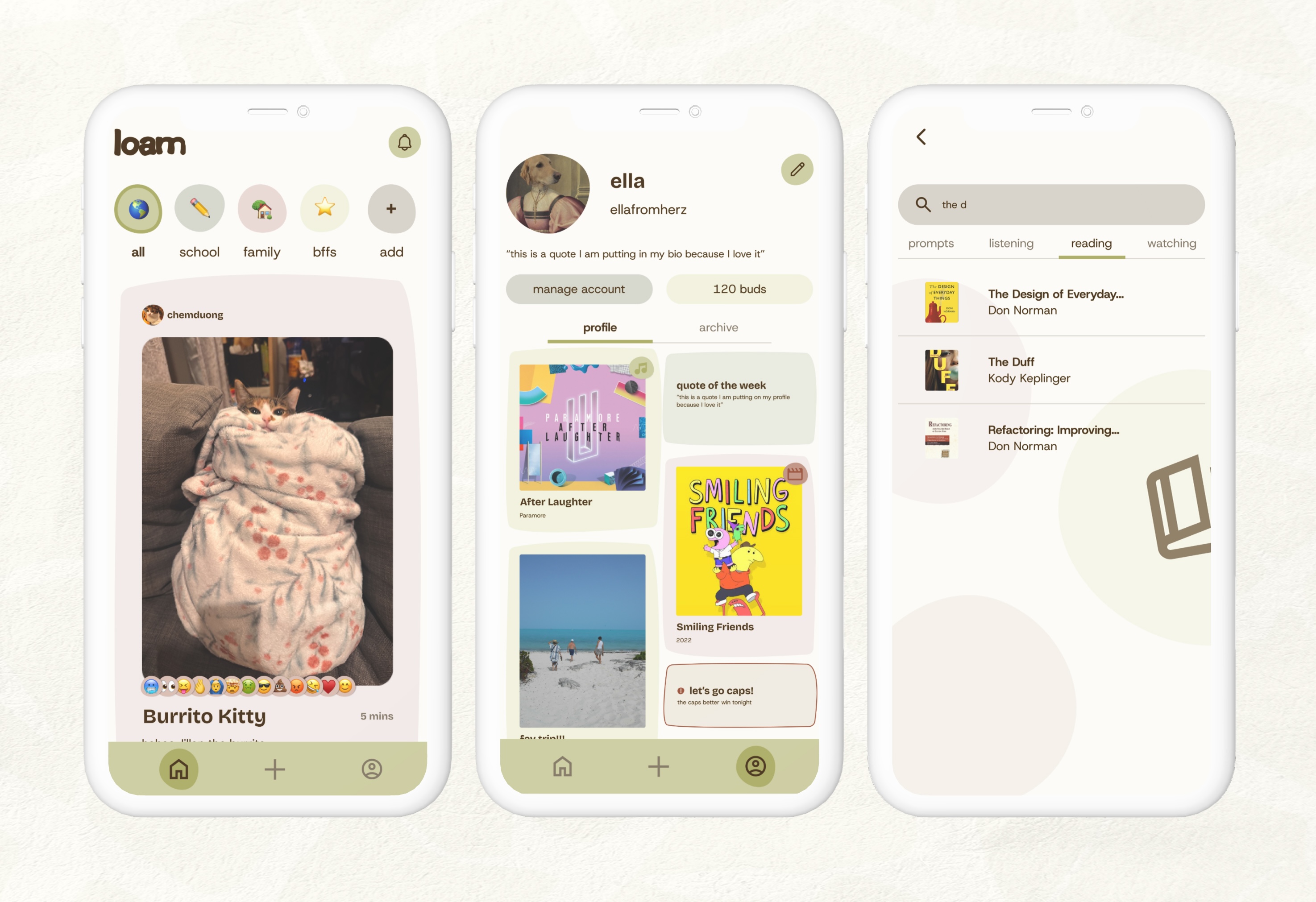
In the summer of 2026 I pitched Loam to six fellow students in my major. I feel incredibly grateful to have found a team completely aligned with me in our goals and values from day one.
As PM and team lead I wore many hats: developing and revising our roadmap across 10 months, shepherding Loam's ethos through every decision, distributing work across the team, contributing to designs, and working directly with our lead developer to build the web-app.
In addition to my contributions building the platform, I was responsible for managing our relationships and feedback loops with our users, establishing the brand voice, writing our copy, and coordinating community events.
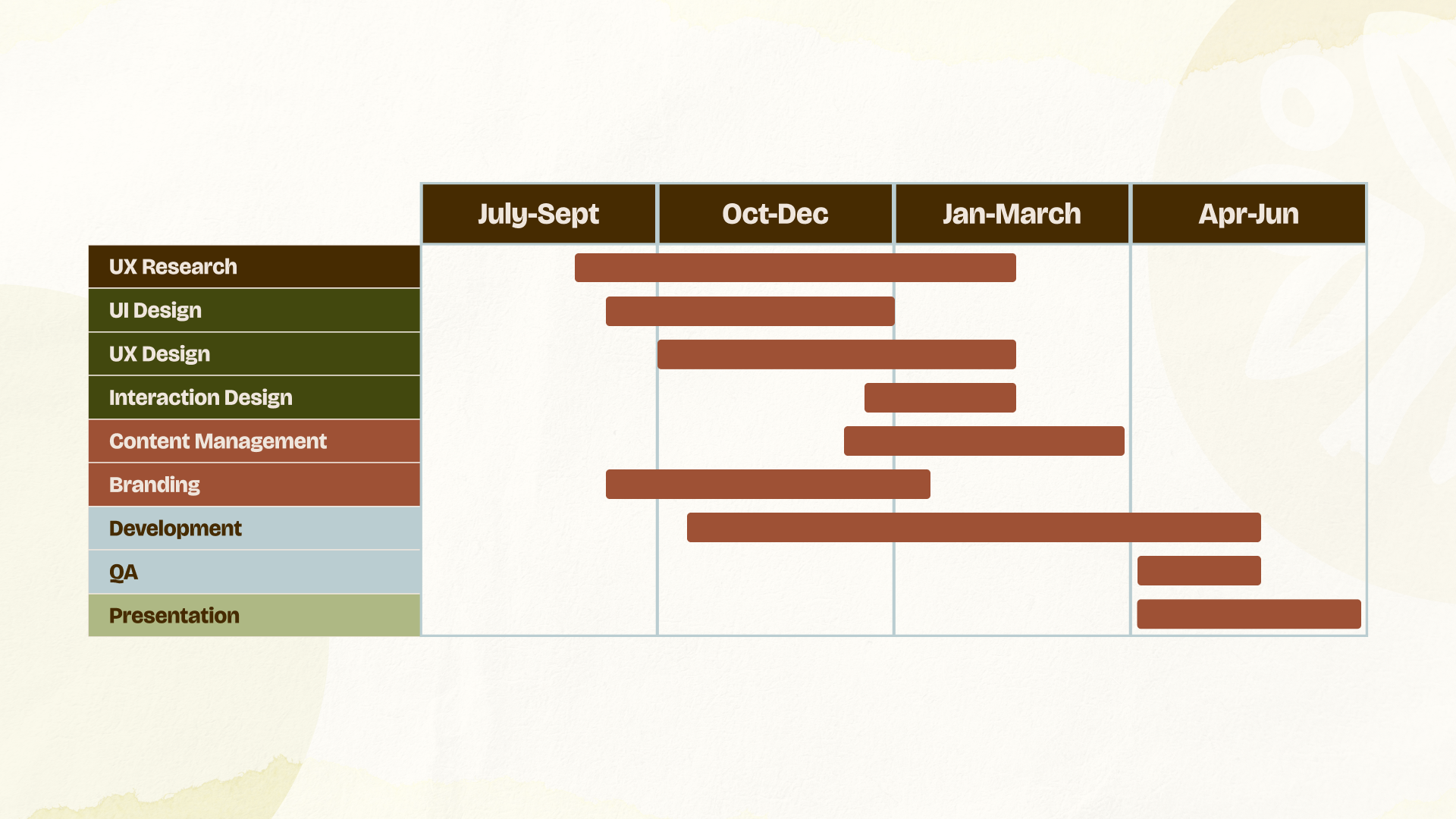 Project Roadmap
Meaningful connection has been
sacrificed for engagement.
Social media platforms are driven by design that prioritizes virality, controversy, and superficial metrics. This environment has created unhealthy consumption habits and incentivizes posting content designed to capture attention rather than share and connect.
Beyond individual well-being, the pervasive nature of these platforms has broader societal consequences. They've become breeding grounds for misinformation, eroding public trust and building social echo-chambers that dramatically increase polarization between social groups and undermine democratic institutions.
As the dominant players remain focused on this "addiction race," there is a clear opportunity for a new kind of social network: one that is designed for intentional connection with those we care about.
"It's a constant pursuit of hijacking my brain to keep me on the app as long as possible."
We validated this tension through extensive secondary research, surveying a combined 108 participants, and completing dozens of guerrilla interviews in public parks in Philadelphia and around Drexel's campus. The appetite for something better was real.
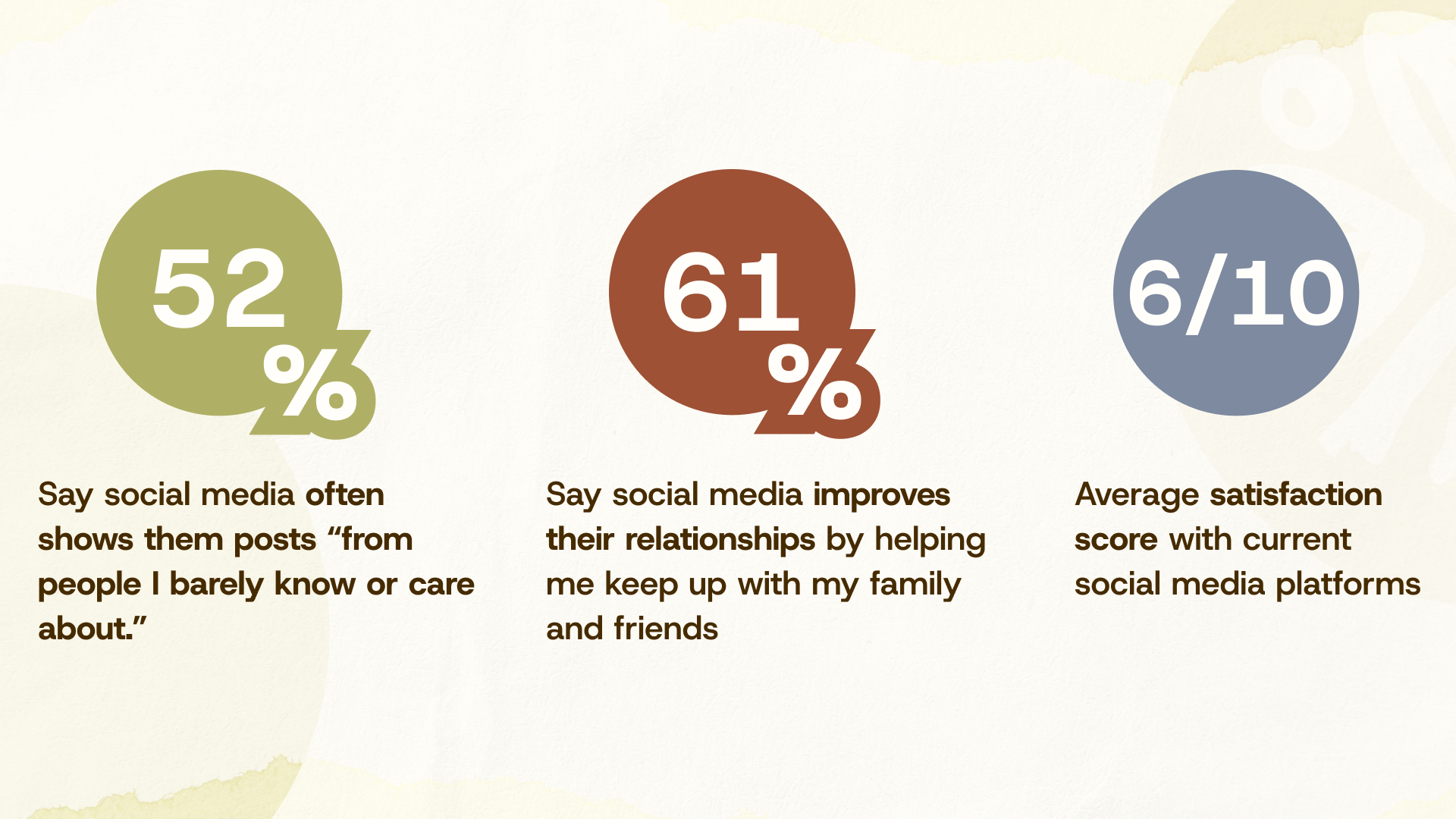 54 participants surveyed for a feeler-survey
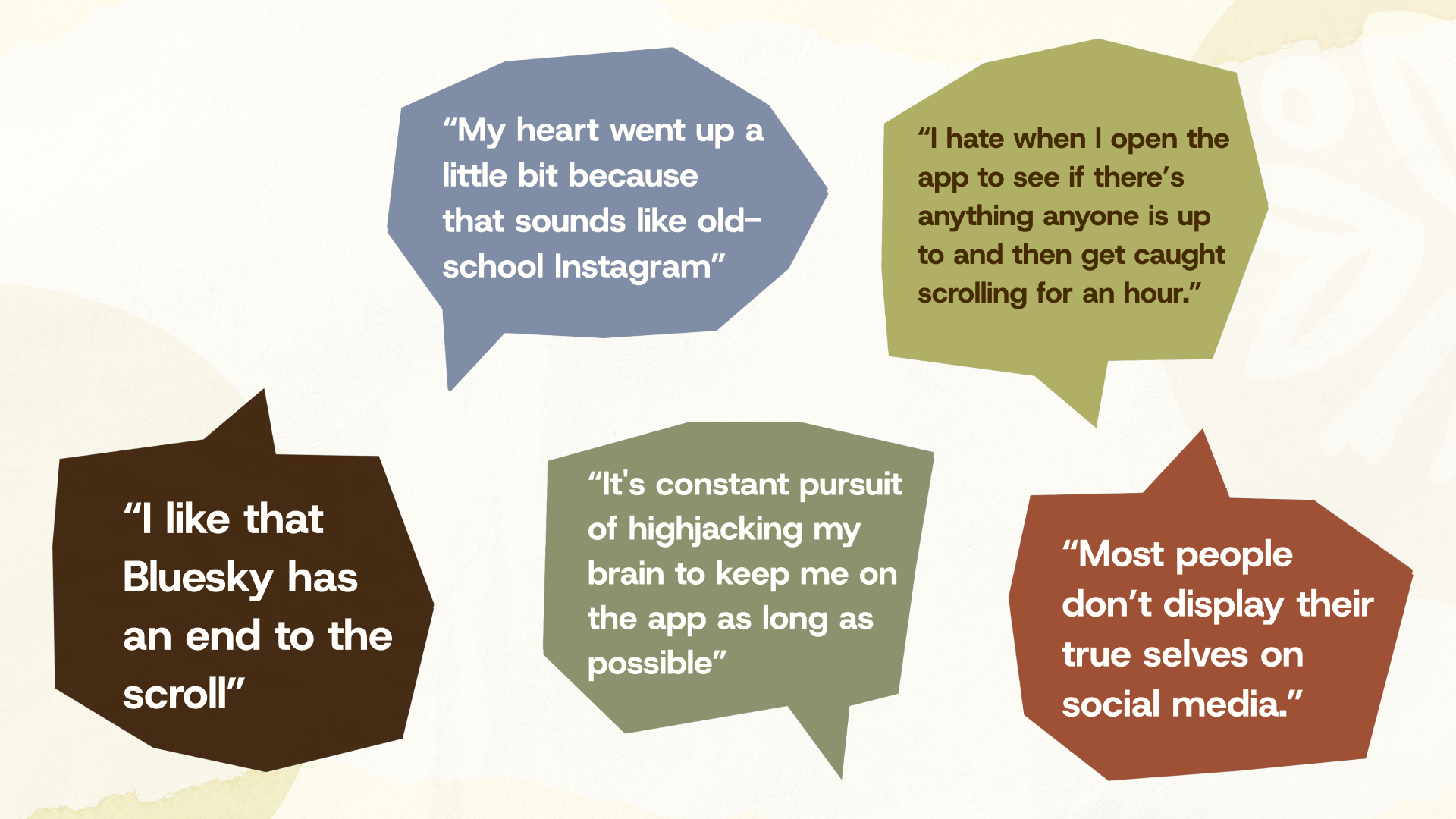 Direct quotes from our on-the-street interviews
A social app built for
connection, not consumption.
Loam is a social sharing app that has created an ideal foundation for growing and maintaining meaningful relationships. Our designs are algorithm and metric free, working to help users share authentically.
Each feature — or deliberate lack thereof — is built to foster healthy online social habits and eschew the dark patterns present on existing platforms. Our commitment is to the betterment of each user: not their data, not their attention, not their profitability.
We had to unlearn much of what we knew about building social platforms and redefine what good design truly means. The guiding question for every decision we made:
"How can we effectively incorporate ethical consideration into each decision we make while designing and building Loam?"
Our first order of business was developing our values and mission. What loam should be and what loam shouldn't be for our users. Every design, development, social media, and copy decision we made was put up against these values as we went.
Establishing an identity that
feels like the product.
We conducted a desirability study to understand how potential users emotionally responded to our idea. The results directly informed the look, feel, and values of the brand.
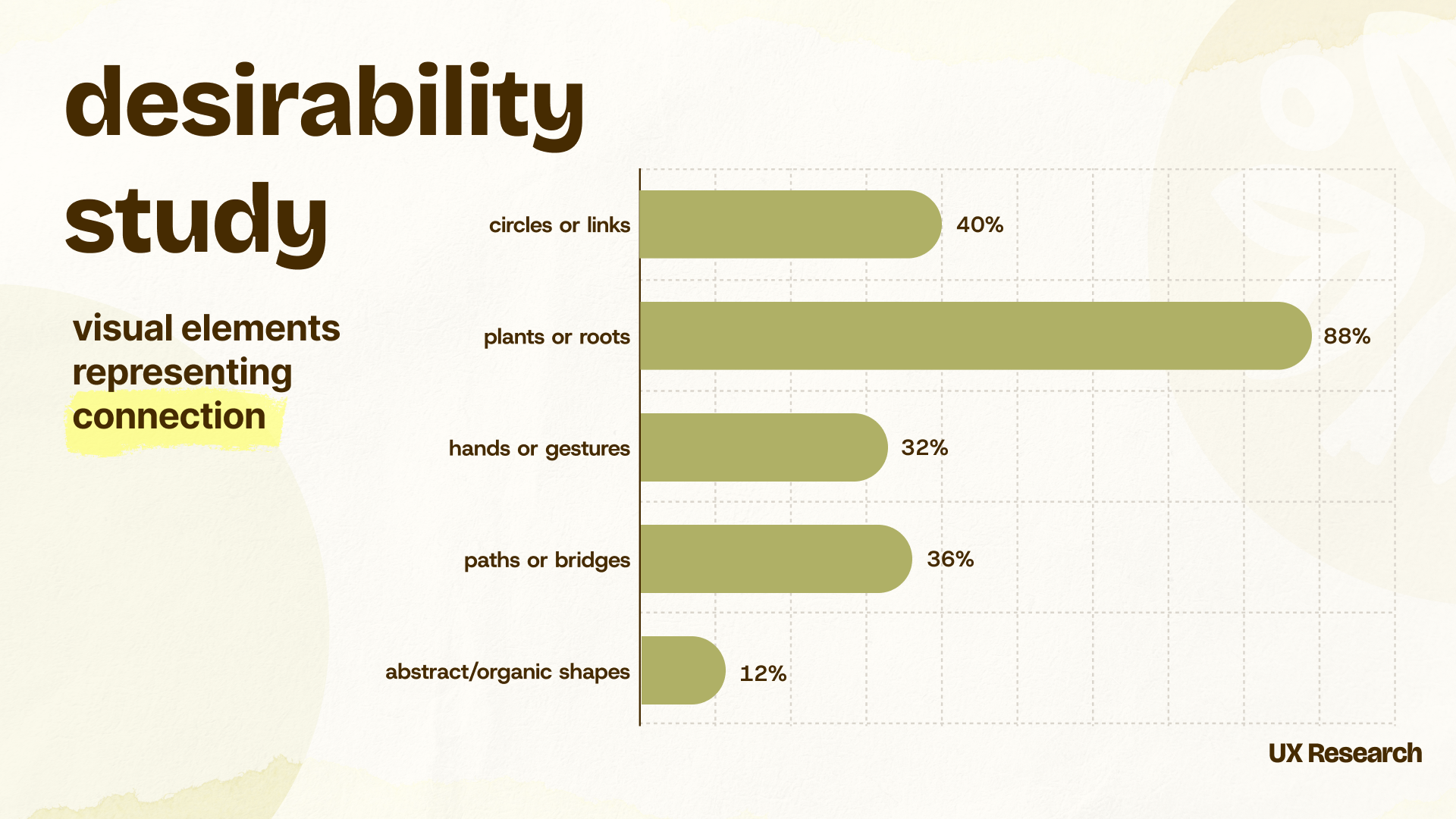 Most users thought of natural imagery when visualizing connection
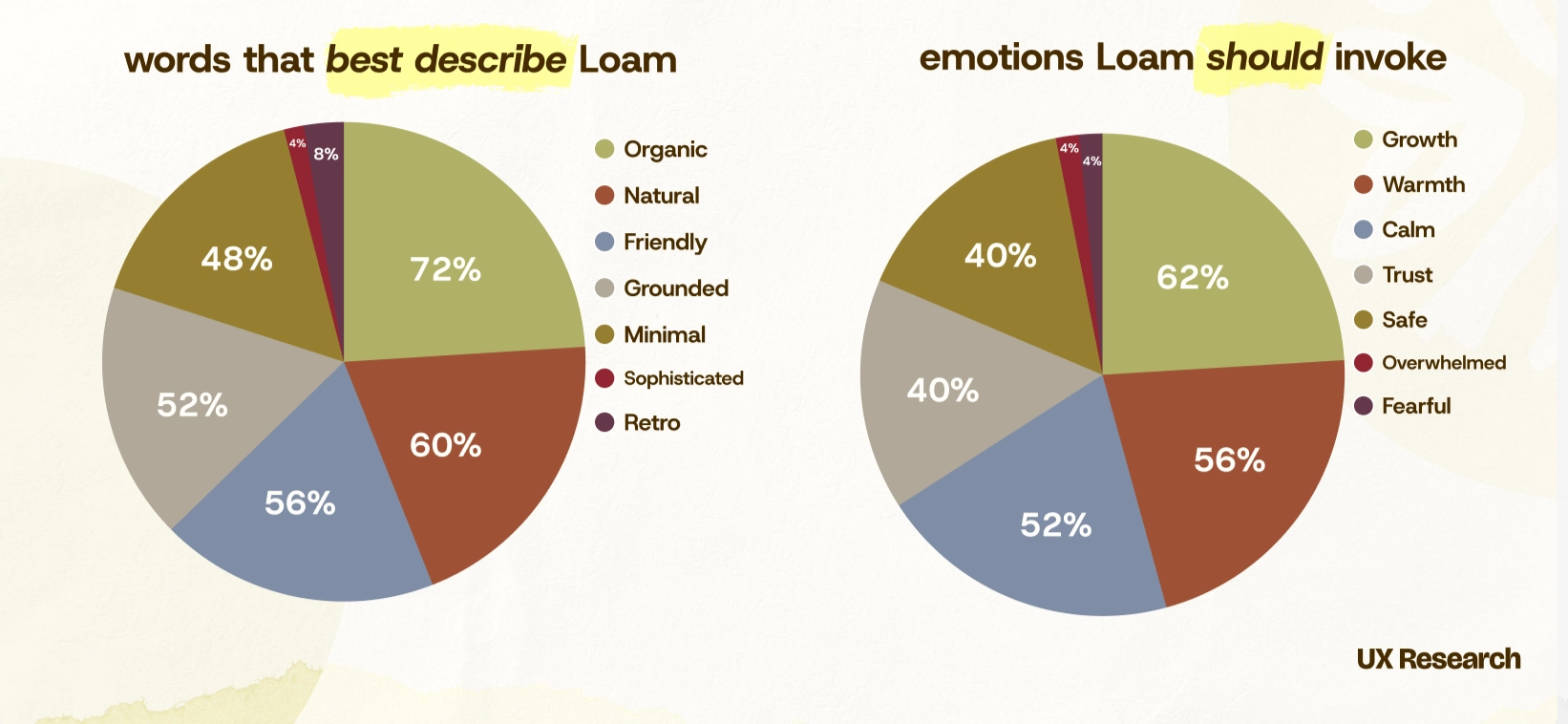 When user's think of loam, they think of Organic qualities that inspire Growth and Warmth
This informed both the logotype and the logomark. The final logotype uses hand-drawn letters characters to bring in a human touch, softened and bloated anchor points to create natural uneven curves, and an earthy color palette grounded in soil and nature. The logomark integrates leaf forms, root-like curves, and a non-perfect circular shape: a subtle abstract reference to L-O-A-M hidden across the top, grounded by the roots below.
Connection doesn't
have to be digital.
As part of Loam's identity, we wanted to bring in a physical component, an object that represents real-world interaction, not just digital connection. Something people could carry, use, and display that quietly signals: "I'm a Loam user. You can connect with me."
We defined four criteria: affordable, functional, user-friendly, and portable. All while supporting NFC tap-to-connect functionality. We explored keychains and collectible figures, but most only served one purpose. That's when the carabiner made the most sense.
Simple, useful, cheap to produce — people already clip it on bags and belt loops, making it perfect for visibility and NFC functionality.
Our team studied how carabiners work mechanically and challenged ourselves to design one that is fully 3D-printed with no extra hardware. After testing several functional models, we moved into form exploration inspired by leaves, soil, and our lettermark. Landing on a bag of soil and a leaf shape as the first prototype forms.
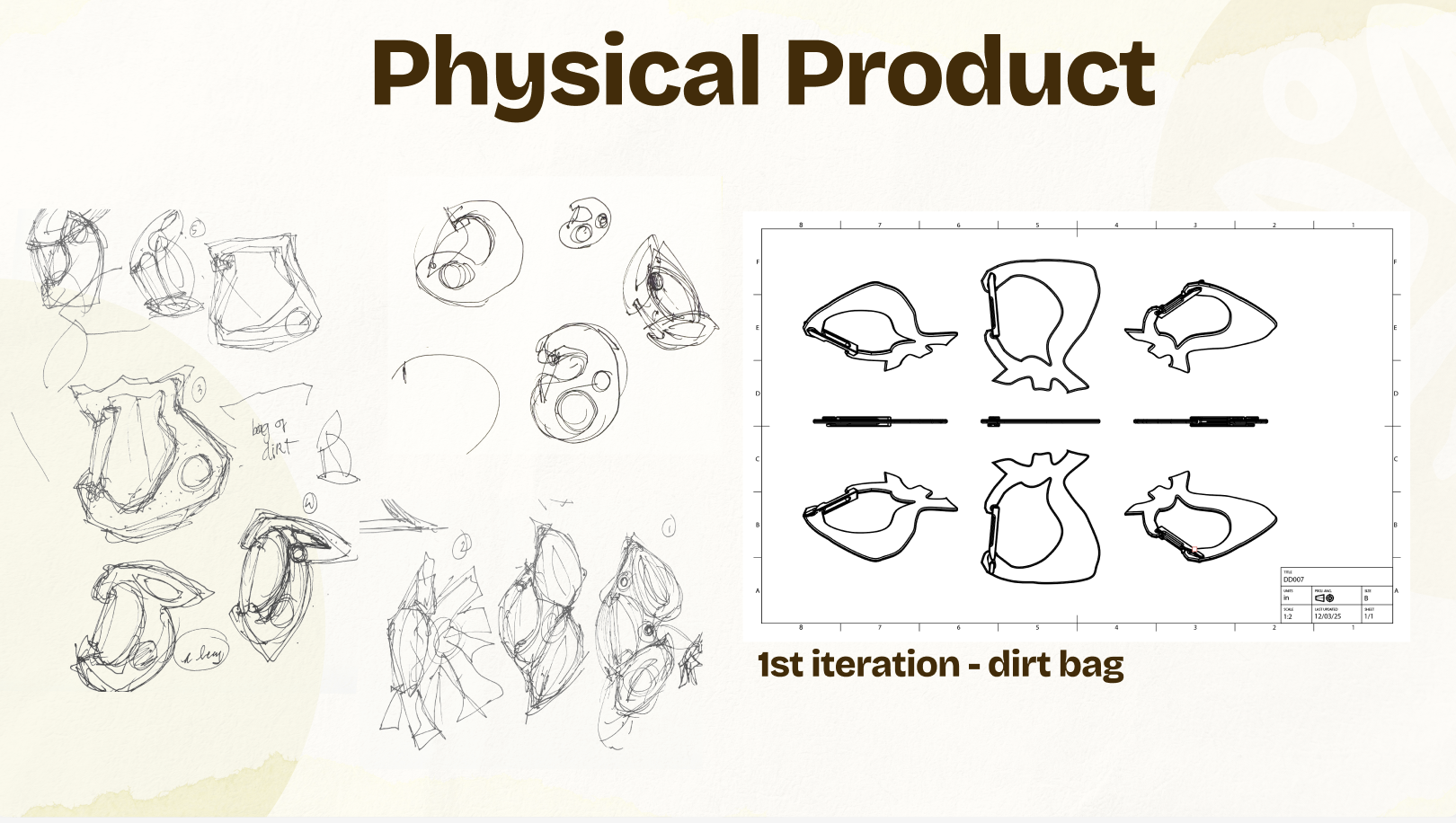 Loam Carabiner sketches
Two rounds of testing.
Real frustration, real fixes.
Once we had confidently established our brand identity and voice, we moved to the design phase of our project. We ran prototype testing at both low and mid fidelity, using each round to surface assumptions we hadn't caught in design.
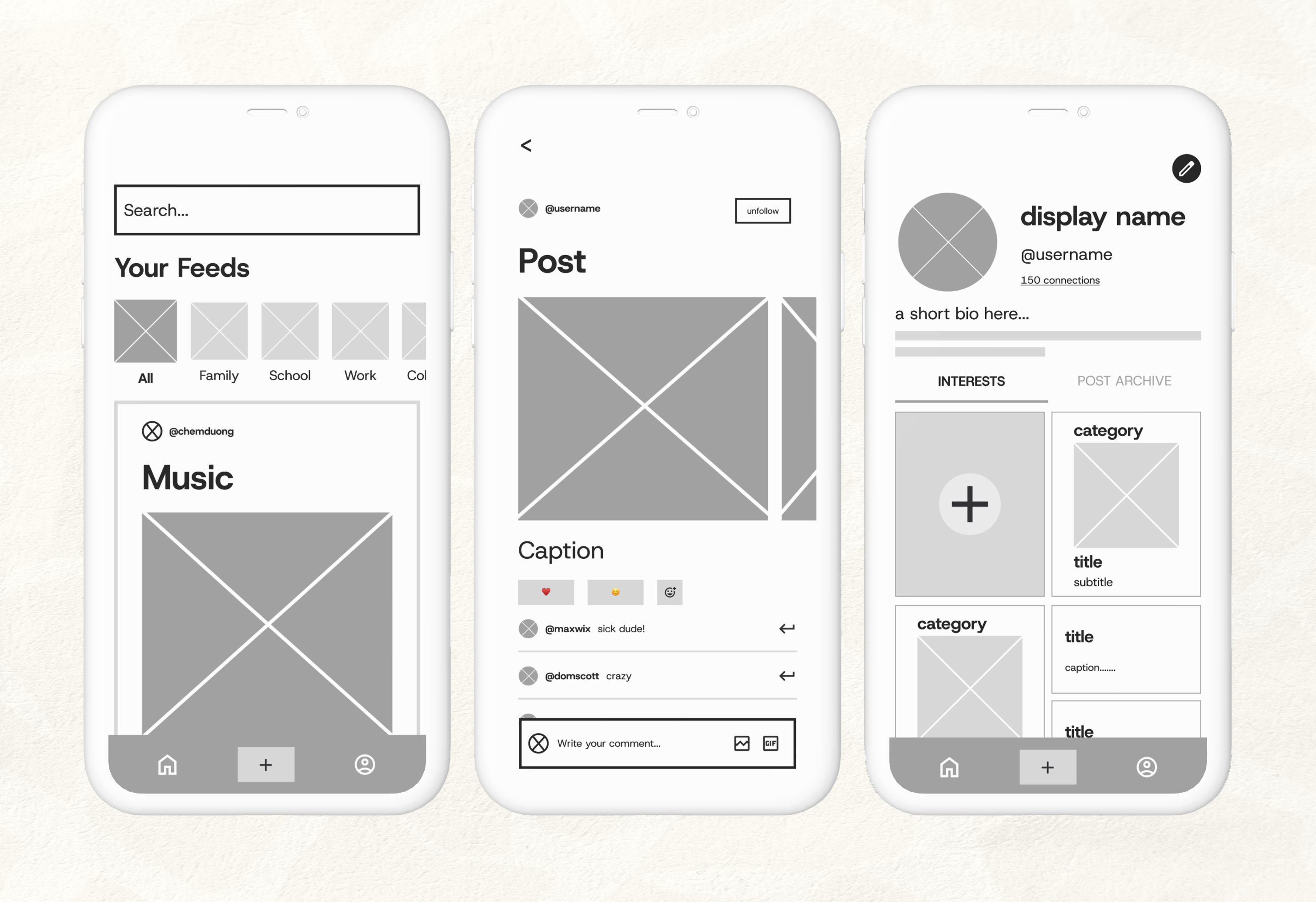 Low Fidelity Screens
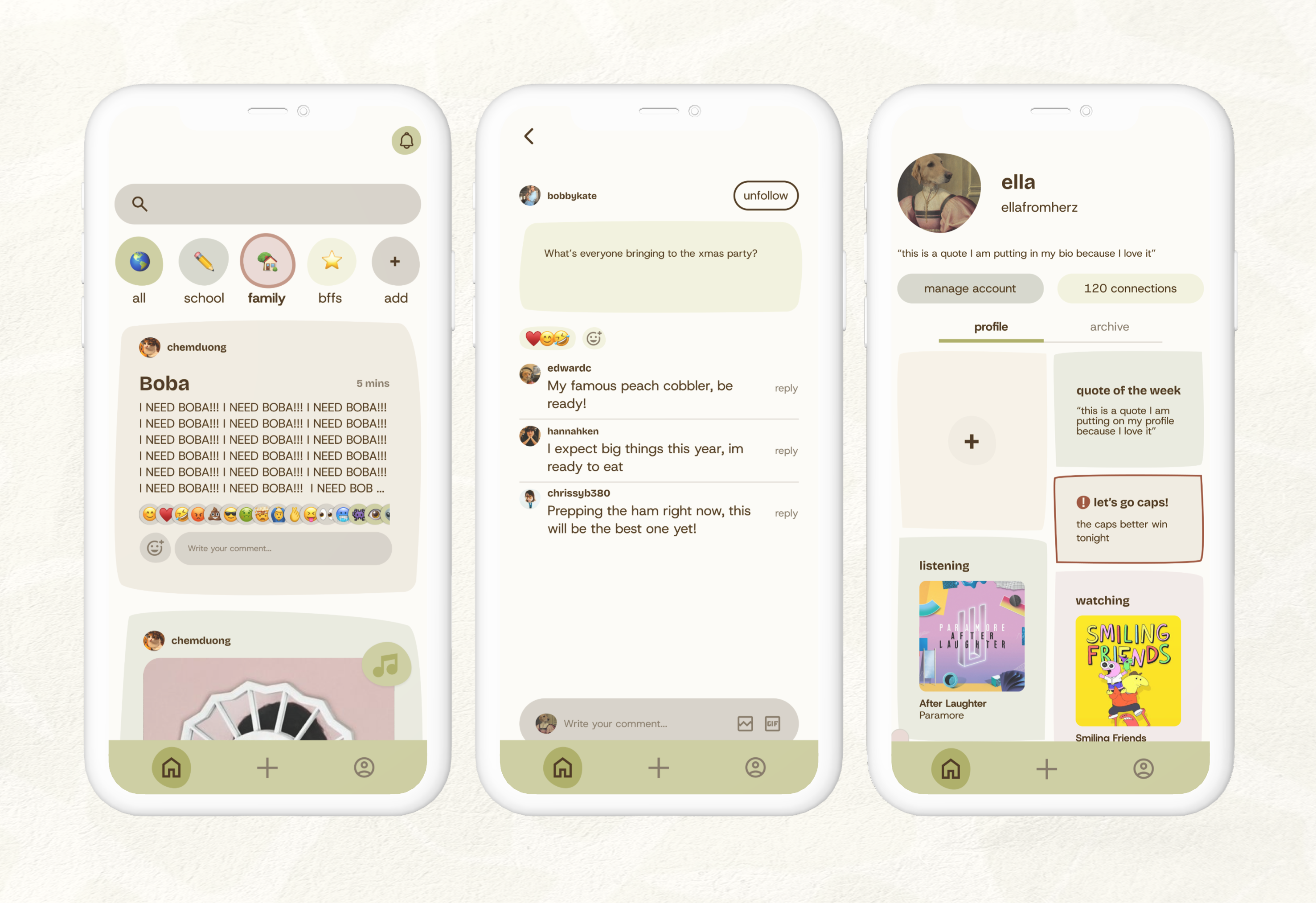 Mid Fidelity Screens
Every feature is a
deliberate choice.
Loam's feature set is defined as much by what we left out as by what we built. Each decision was stress-tested against our core commitment: betterment of the user, not their data.
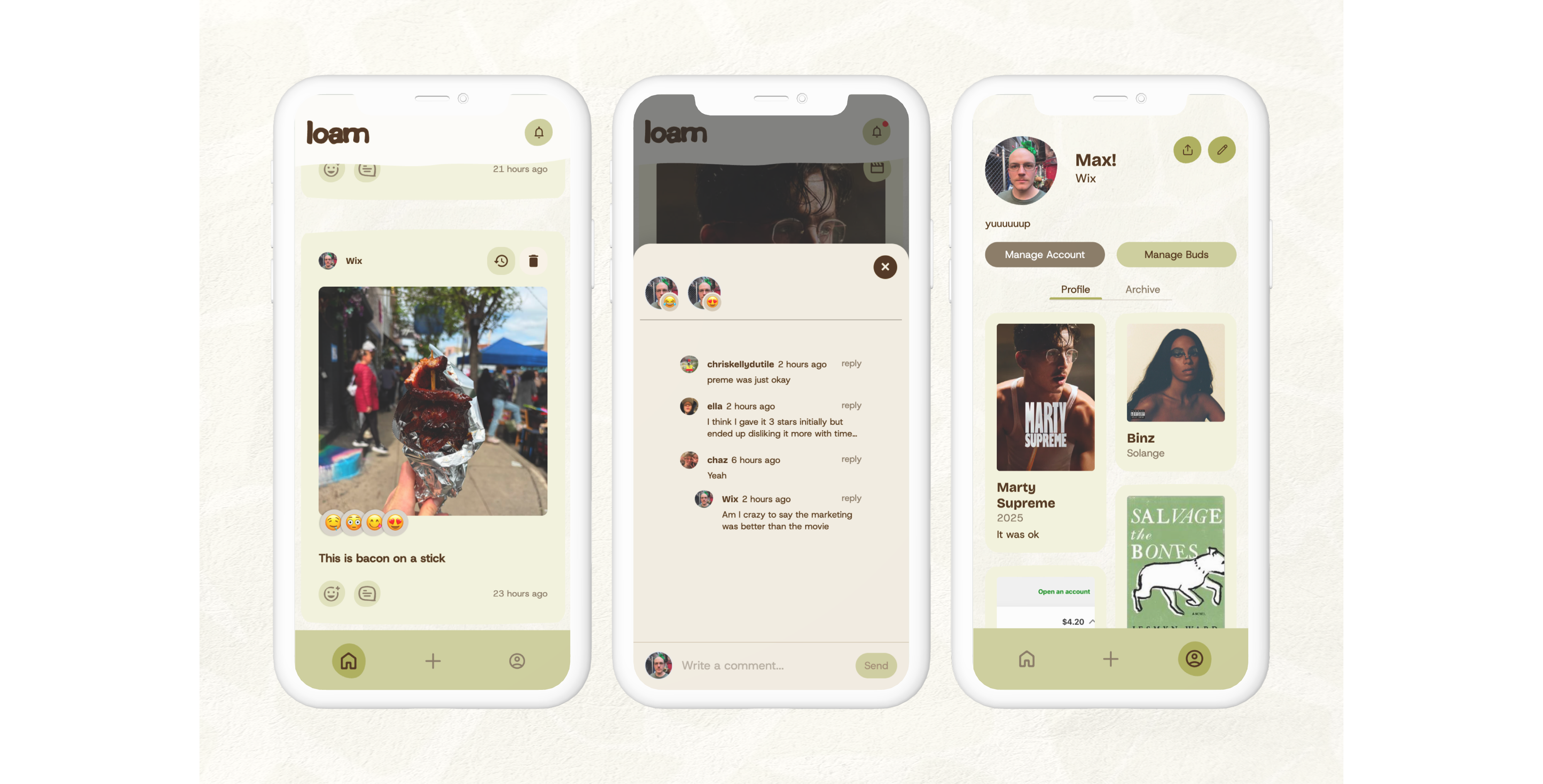 Final Product Screens
50 users and counting. Real behavior.
The proof is in the pudding.
After building a confident prototype we shipped a live MVP web-app. After having a confident prototype we moved on to build a live MVP web-app for loam. We built the app using Svelte, SCSS, and nodeJS. We used Supabase for our database, Cloudinary for image transformation and storage, and Resend for communication with users.
40 users used it regularly — including us. This was an opportunity to surface behavioral patterns that prototype testing simply can't unearth.
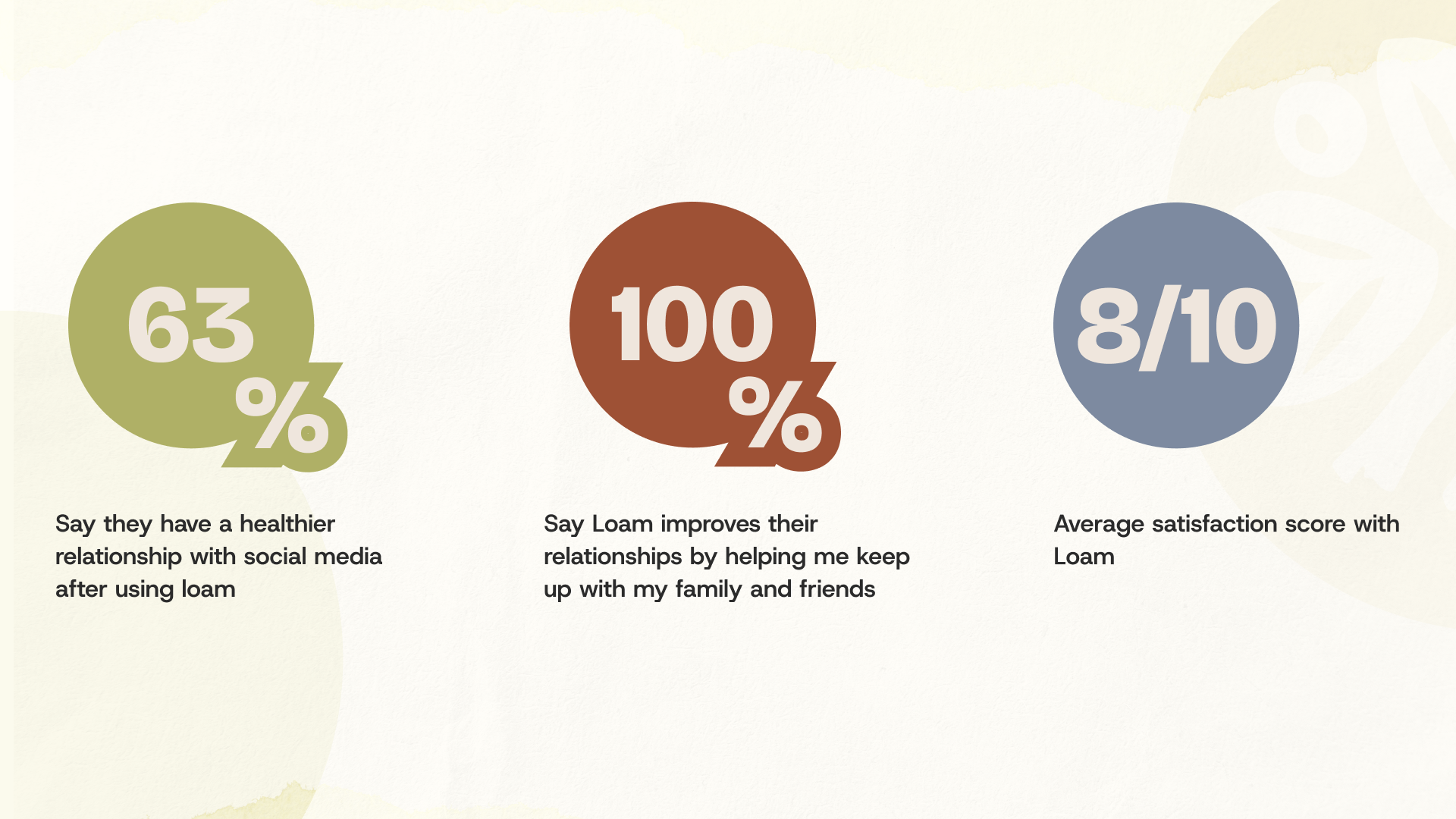 MVP exit survey results
Compare that to the 6/10 average satisfaction with existing social platforms we found in our initial research. In 10 months, starting from a pitch and a shared belief, we built something that genuinely moved people's relationship with social media.
This isn't a case study about revenue or engagement. It's about building something that matters — and proving, with real users, that it does.
Building with
discipline.
Intention is a core aspect of Loam's ethos, we want our users to be intentional about how, and to who, they give their time online. Nowhere is this more deliberate than in how connections are made.
There is no way to search for users or receive suggestions for connections in the app. When a user signs up for loam, we want them to give thought to who they'd like to be connected with and go out of their way to invite those individuals to connect. Our hope was to make it a process that was mindful, not frictionless.
"We want every connection on Loam to be a reflection of a real connection in your life."
We noticed something unexpected during the MVP: users were signing up and not connecting with anyone. There was a preexisting expectation that Loam would do the heavy lifting — that there would be suggestions, a discovery page, an easy way to find people they might know. Some users wanted to search by name. Some wanted a public list of everyone on the app.
This was a tempting, and objectively effective, fix. We had around 50 users, most invited by our team, most friends with each other. Most not connected. A basic suggestion algorithm or a full user list would've created many immediate connections. It could've been the kickstart the app needed.
Over time, we noticed users started finding each other on Loam. Where? In person. Users who spent meaningful time together eventually talked about Loam, realized they were both on it, and connected in that moment. A connection that wasn't handed to them but discovered through real-world interaction.
By maintaing a certain friction to the process, every connection on Loam became a reflection of a genuine relationship. Users were building their own social environments instead of standing by while an algorithm did it for them.
"Think about how you'd perceive a sweater you hand-knit yourself versus one you got for free at a company event. Where there is effort, there is pride."
Allowing friction to exist where it should and avoiding the quick fix is what makes Loam as special as it is. This was one of the hardest decisions we made as a team, and the one I'm most proud of.
Visit Loam — loam.ing ↗